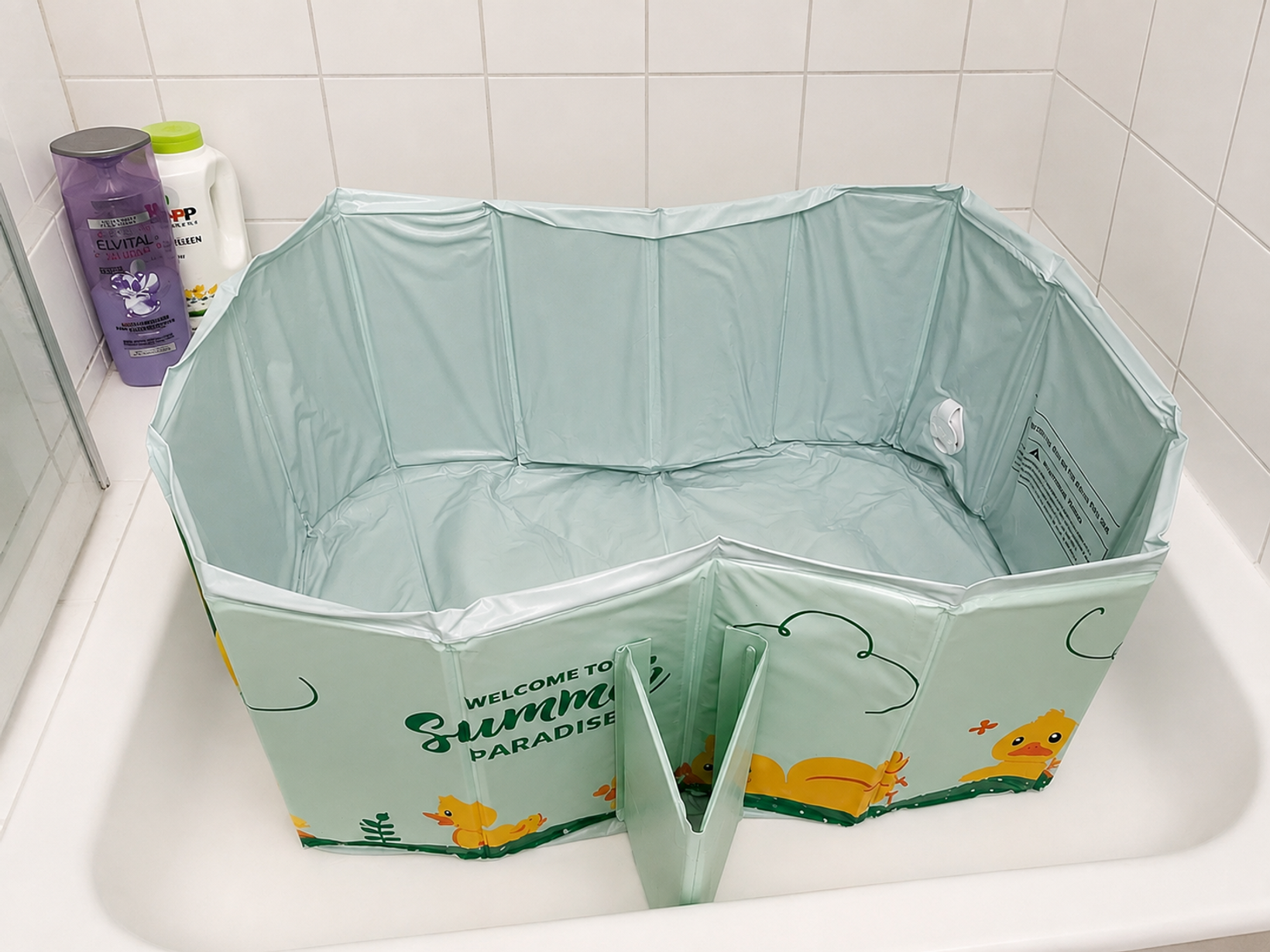
My son had outgrown his bathtub. Technically he still fit in it, but at 11.5 months and almost 12 kg, "still fits" wasn't really the standard anymore - bath time had turned into serious business, with him wanting to sit up, turn around, splash, play, and ideally bring half his toy collection in with him. There just wasn't room for all of that. So I needed something bigger, which sounded like a simple enough problem to solve. It wasn't.
Yes, a 78 cm baby bathtub can fit into a shower tray with only about 70 cm of usable length. In my case, it worked because the listed 78 cm described the tub's overall length at its widest point, while the base that actually sits on the shower floor was shorter. ChatGPT didn't find the tub for me, but it helped me spot that difference before I ordered it.
The real problem was the shower, not the bathtub
We don't have a regular bathtub, just a shower tray with roughly 70 × 58 cm of usable flat space, and even that's generous since the corners are rounded and eat into the real usable area.
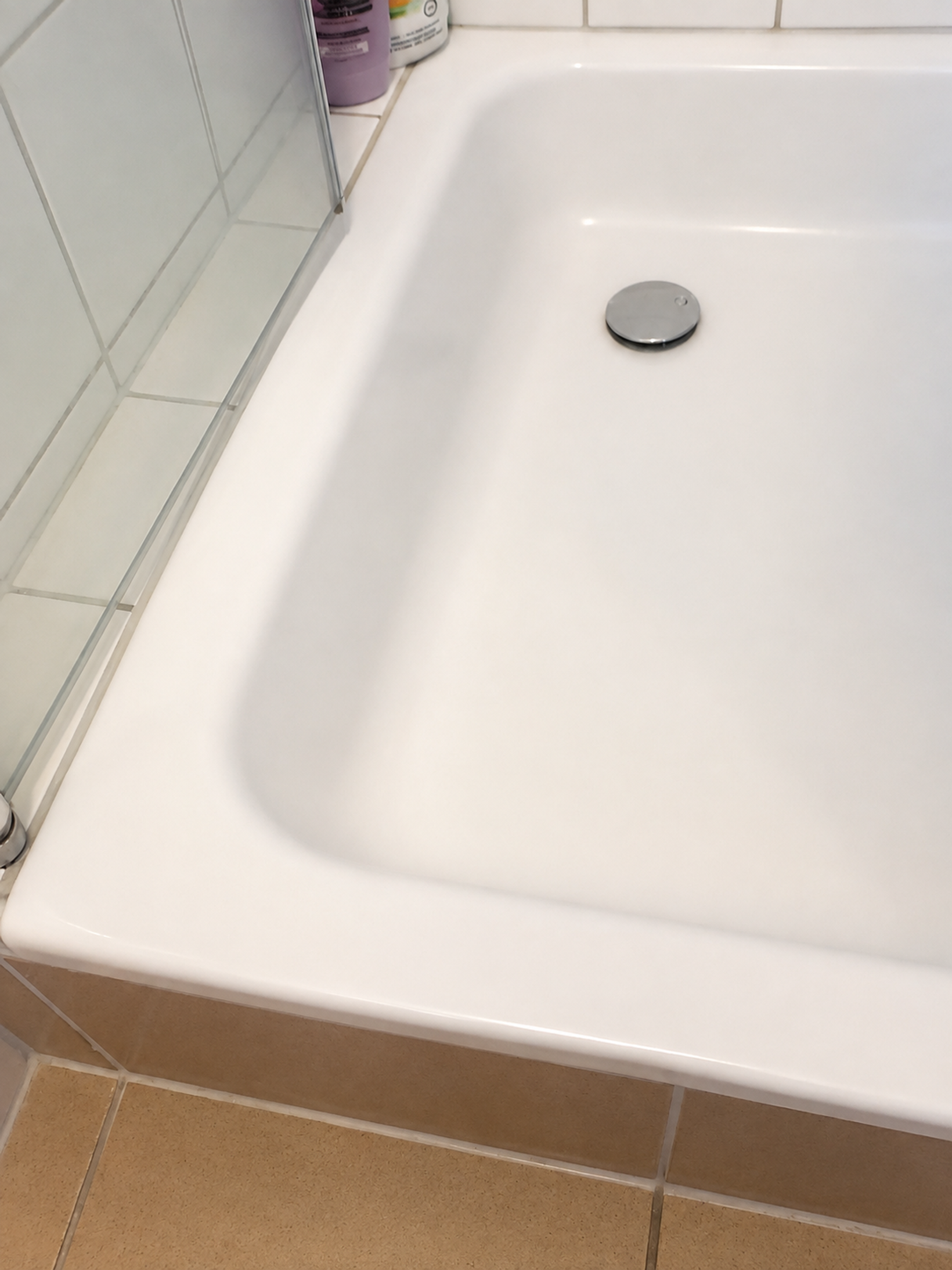
That ruled out a lot of options fast. Some of the bigger foldable tubs I found were nearly a metre long. Others were basically the same small baby-size tub I was already trying to replace. A few were only rated up to 15 kg, and my son's already close to 12.
I really didn't want to buy something that would need replacing again in a few months, so the list of requirements ended up being: big enough to actually play in, small enough for our shower, foldable because we don't have spare storage space, and ideally something that would last more than a season.
Asking ChatGPT to find one didn't go well
I explained what I needed. Then explained it again, slightly differently. It kept coming back with the same kind of small foldable baby tub I was trying to get away from - not it, at all. When the suggestions finally got bigger and more sensible, the prices jumped somewhere completely unreasonable.
So I went and searched myself instead - BabyOne, Smyths, Temu, Joybuy, Amazon. Smyths had the Ingenuity Tuckaway, which was at least in the right direction, but I still wasn't sold on it.
Then I found a Lafisun foldable tub on Amazon, and I want to be clear that I found that one myself, not ChatGPT - that distinction matters for what comes next.
This is where ChatGPT actually earned its keep
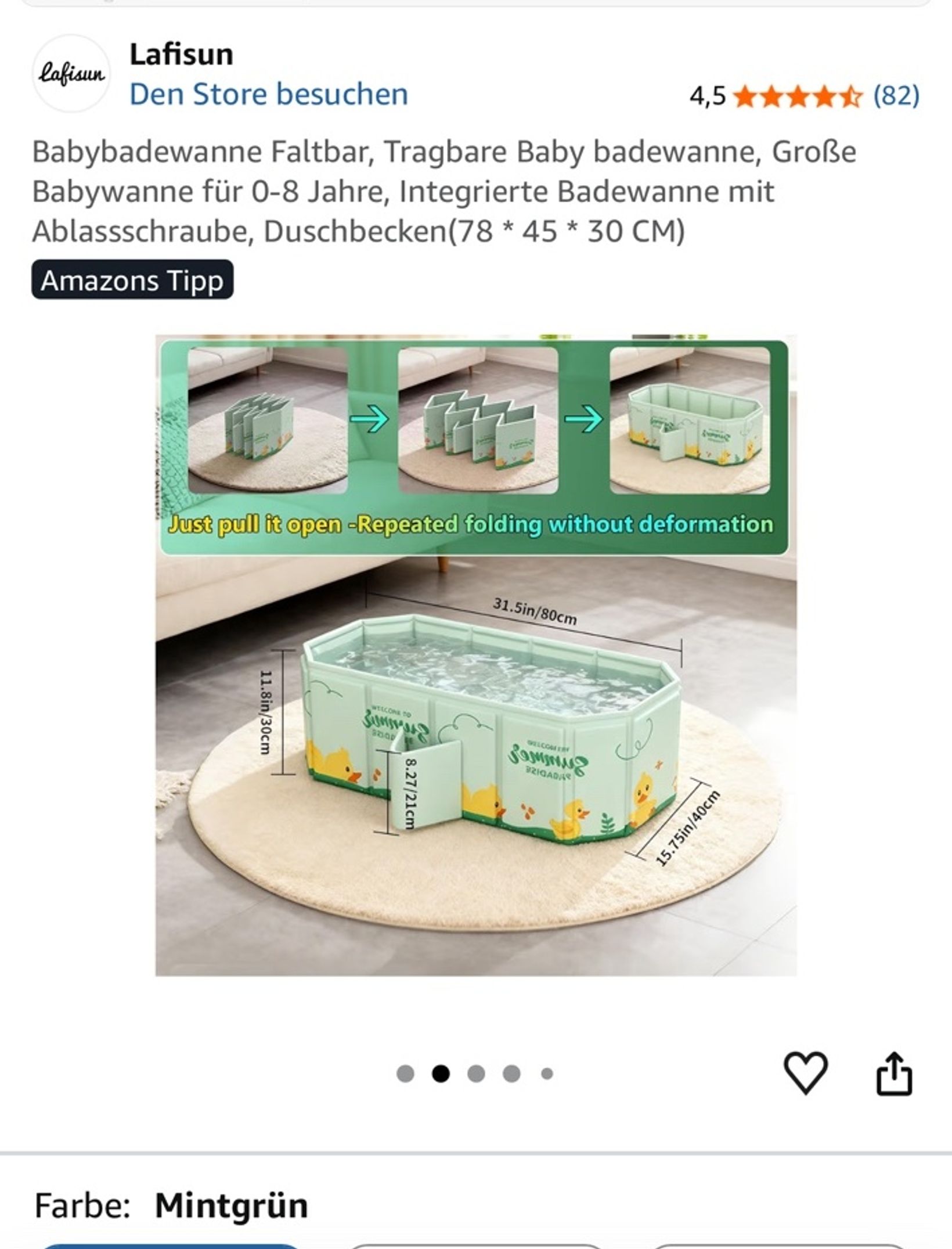
The Lafisun looked close to perfect - large, deep, foldable, with what looked like plenty of interior room in the photos, and the listing claimed it worked for kids from 0 to 8 years. €27.89.
Only one problem: the listed dimensions were 78 × 45 × 30 cm, and my shower tray's usable length was 70 cm. By basic math, that's a no - 78 doesn't fit into 70, and normally that's exactly where I'd have closed the tab and kept looking.
But I liked this one enough to actually send ChatGPT photos of my shower and ask whether there was any realistic chance it would fit anyway. That's where it actually helped.
The listing only gave the tub's overall dimensions, not the one number I actually needed - how much space the base takes up where it actually touches the floor. Looking at the photos, the tub clearly widened toward the top, with the sides and supports set at an angle rather than running straight up and down.
ChatGPT pointed out something fairly obvious in hindsight that I hadn't actually thought through myself: if the tub measures 78 cm at the top, the base sitting on the floor could easily be quite a bit shorter than that.
No guarantee, since we still didn't have the exact base measurement, but it turned the decision from "trying to force 78 into 70" into something closer to a calculated bet.
We checked the numbers again side by side - tray at 70 × 58, tub at 78 × 45 × 30. Width was never an issue, there was about 13 cm of slack there. Length was the only real question, made messier by those rounded corners on the tray.
I decided the €27.89 was worth the risk.
And it fit - properly
Not "technically squeezed in," not "works if you don't look too closely." It sits inside the tray firmly, doesn't wobble, feels genuinely stable.
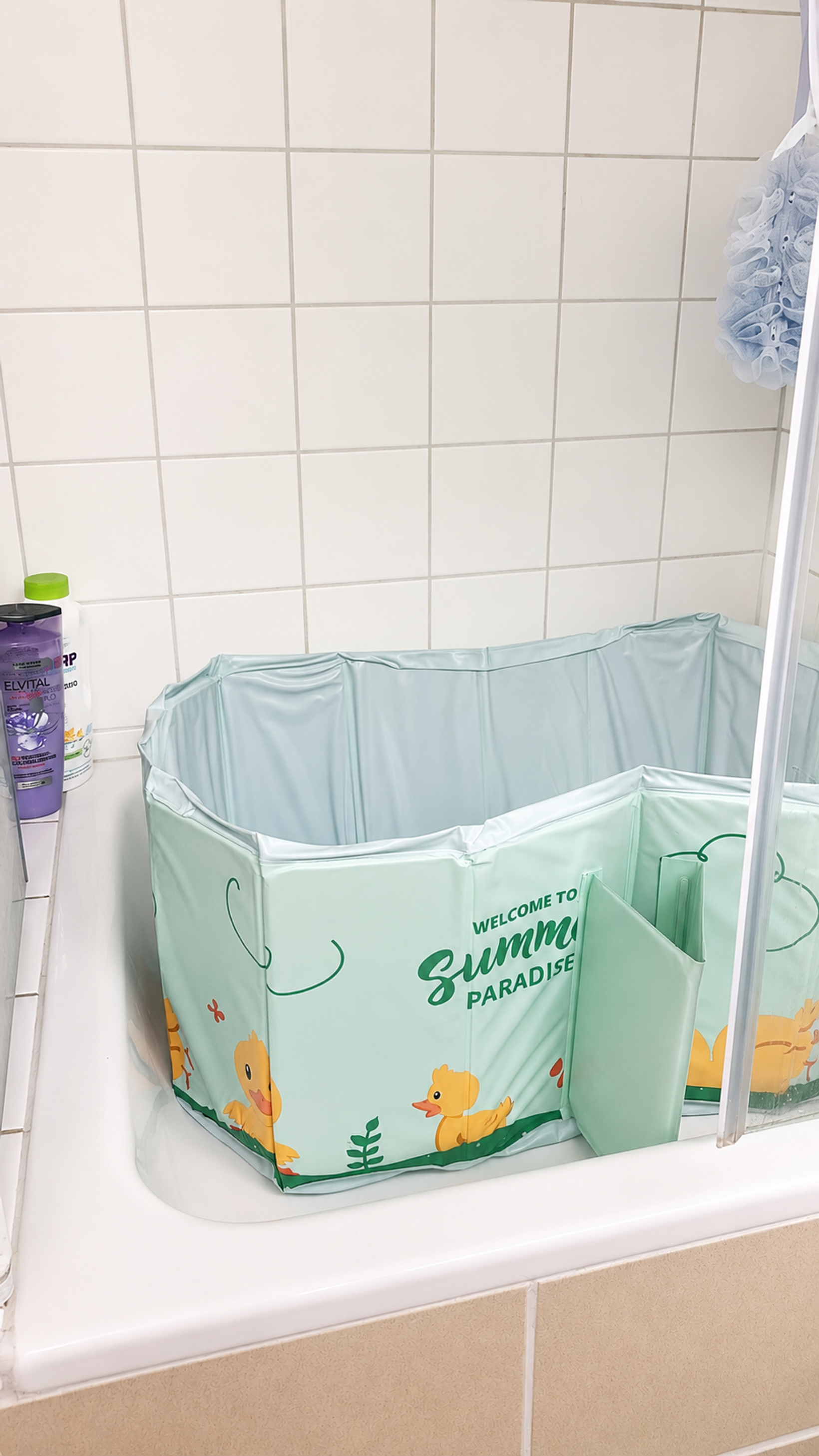
The reasoning held up. The 78 cm measurement described the tub's overall size, but because it widens toward the top, the base itself takes up less floor space. That difference was enough for it to fit.
My son now has enough room to sit, turn around, play, and generate whatever amount of chaos he considers appropriate for bath time. Which, these days, is quite a lot.
So did ChatGPT actually help?
Yes - just not at the stage I expected it to.
As a shopping assistant, it was frankly not great this time. I explained the requirements multiple different ways and mostly got back either the wrong category of product or options priced well outside what made sense. I found the actual tub myself.
But finding the product and feeling confident enough to click "order" turned out to be two separate problems. I had measurements, photos, an awkwardly rounded shower tray, and a bathtub that on paper shouldn't have fit at all.
That's the part where ChatGPT was genuinely useful - not as a search engine, and not because it magically knew the right answer, but more like a second pair of eyes: looking at the shape, comparing it against the actual space, and helping me judge whether the risk was reasonable.
That's probably the real takeaway here. AI might not find you the right product no matter how precisely you describe your shower, your apartment, or your shoe size. But once you've already found the thing and just need help deciding whether to trust it, it can be a lot more useful than I expected.
Without that conversation, I probably wouldn't have ordered this tub - and I have no idea how much longer I'd still be searching.
Bought this myself - no affiliate links in this post.