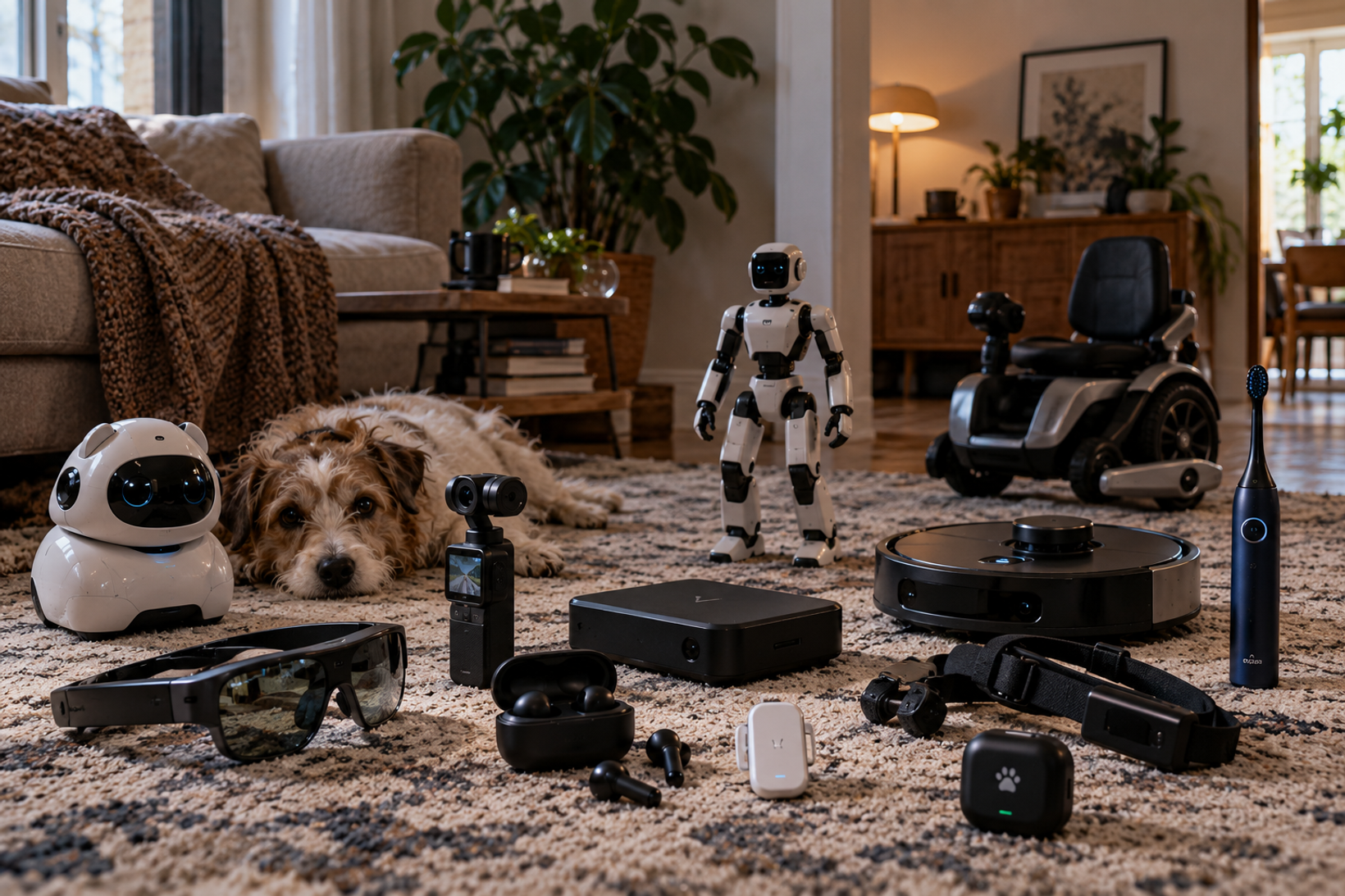
Are AI gadgets actually worth buying in 2026? Some are. The most useful ones solve a clear problem: organizing information, making mobility easier, catching a dangerous fall. Others take something that already worked perfectly well, bolt on AI, and charge considerably more for it. That's basically my conclusion after going through 13 of the most interesting and weirdest AI gadgets of 2026: more AI doesn't automatically make a better product.
Your earbuds need AI now. Your toothbrush needs AI. Your dog, apparently, needs an AI-powered phone. Your robot vacuum needs another robot vacuum. And if you happen to have €90,000 lying around, you can buy yourself a humanoid robot to do a backflip in your living room.
I went through some of the most interesting AI gadgets shown or talked about around IFA 2026 with one question in mind: would I actually want this in my life? Not whether the technology is impressive, because a lot of it genuinely is, but whether it solves a real problem, whether the price makes any sense, and, more and more, this is the one that decides it for me, how much of my life I have to hand over to it in exchange.
Quick disclaimer: I haven't personally tested these products. This is me looking at what the manufacturers promise, current prices and specs, whatever independent experiences exist, and being honest about whether I can see myself actually using any of it.
1. Plaud One
Plaud One is basically an AI assistant living in a pair of earbuds and their case. Around €250 in Germany, plus paid plans if the included transcription allowance runs out. It records conversations, meetings and calls, transcribes them, summarizes what was said, and turns that into follow-up actions.
Recording a meeting isn't exciting on its own. My phone does that. What Plaud is actually selling is what happens after the recording: turning messy spoken information into something structured enough for AI to act on, pulling out action items, connecting the context to your other tools.
Would I buy it? Probably not, personally. But if I sat through ten meetings a day and constantly needed to remember who promised what, I'd get the appeal fast. The raw recording isn't worth €250 to me. The structuring might be, for the right person.
Useful? Absolutely. Is a good prompt worth €250? Maybe, if you don't know how to write one yourself.
Verdict: 🟡 Useful, but not €250-useful for me.
2. Violoop
I want to like Violoop more than I actually do. Instead of another AI app on your computer, it's a physical box that watches your screen, understands what you're doing across different apps, and does tasks for you. You say what you need, it figures out the rest.
In theory, great. My problem is one word: verification. I use AI constantly, and the one thing I never do is assume its output is correct. It hallucinates, misreads instructions, and will confidently hand you something wrong as if it were fact. So if Violoop is doing an entire task end to end, is it also doing the checking? Who's the human in that loop, if not me?
Early pricing starts around $370. I'm not paying to be one of the people who discovers all the ways this breaks in real use. Give it six to twelve months, let other people find the bugs and complain about them loudly on Reddit, and then ask me again. If someone hands me a free unit to test, though, sure. I'm curious, not against the idea.
Verdict: 🟡 Great idea. Too early to trust it.
3. SwitchBot AI MindClip
This is the one that's dangerous for my wallet. It's a tiny wearable AI recorder, under 17 grams, that clips onto your clothes and records conversations and random thoughts, transcribes them, recognizes different speakers, and turns the mess into summaries, reminders and searchable to-dos. About €100 at launch.

Here's why it hooks me specifically: I'm a single mom, job-hunting, building this website, and my brain runs three unrelated threads at once. Childcare logistics, an article idea, something I need to buy, often in the same five minutes. I don't need a device that transcribes my voice. Plaud already proved that's not the hard part. I need something that can tell those threads apart.
So say I spend five minutes on arranging Tuesday's childcare and then jump straight into three article ideas without warning. Does MindClip know those are different buckets, or do I open the app later to find one undifferentiated wall of text? That's the actual test.
If it can actually do that well, €100 sounds like a very good price.
Adding to cart.
Verdict: 🟢 This one is actually worth checking out.
4. BleeqUp Rover
€459. Sports-focused smart glasses with a built-in camera up to 3K/60fps, stabilization, audio, AI features for safety alerts and automatic highlights, clearly built for cyclists, runners and sports creators who don't want to keep reaching for a phone.
I've wanted smart glasses for a while, so this got my attention immediately. But living in Germany has taught me something specific and slightly annoying: the feature list on the box and the feature list that actually works in your country are two different documents. Before I spend almost €500, I want one boring, unglamorous answer: exactly which of these AI features are live where I live?
Not marketing language. A list.
Verdict: 🟡 I like them. Just tell me exactly what works in Europe before I pay.
5. Hypershell X Ultra S
An AI-powered exoskeleton, €1,999, about 2.5 kg, straps around your waist and legs to assist walking, hiking, climbing, running or cycling using motion sensors and AI-driven control.

For me it's an expensive toy. But I'm not a mountaineer, so honestly my opinion here is the least interesting one available. What actually made me take this category more seriously was reading real-world tests of the previous X Ultra, the predecessor to the current X Ultra S.
Hiker Yoshimi Iwasaki took the X Ultra onto demanding snowy terrain at around 2,600 meters and found it didn't make him superhuman, but it did reduce fatigue, particularly with heavier loads and on descents. In another independent test, Countryfile took the X Ultra across the 12-mile Glyderau Traverse, with steep climbs, loose scree and hands-on scrambling. The assistance worked well on climbs, but technical terrain raised a different question: sometimes having a machine add movement to your legs isn't necessarily what you want when every foot placement matters.
That's the trade-off that interests me. On a serious route, 2.5 kg plus batteries is real weight to justify. Would someone doing a difficult multi-day route rather carry the exoskeleton, or use that same kilo allowance for food and gear? I genuinely don't know the answer, which is exactly why I won't call this useless just because it's not for me.
Sources: Yoshimi Iwasaki, Hypershell X Ultra Review: Does an Exoskeleton Really Help on a 2,600 m Snow Climb?; Countryfile, Hypershell X Ultra Exoskeleton Review.
Verdict: 🟡 Expensive toy for me. Potentially serious equipment for someone else.
6. OlloNi SS1
Cameras, remote viewing, two-way audio and video, facial and voice recognition, memory that builds over time, family-vlog features. All wrapped in something marketed as an AI cyber-pet.
I get why this exists. Some people travel constantly or work too much for a real animal, and I have a dog and a small kid and there are days I genuinely feel spread too thin already. So the emotional pitch lands.
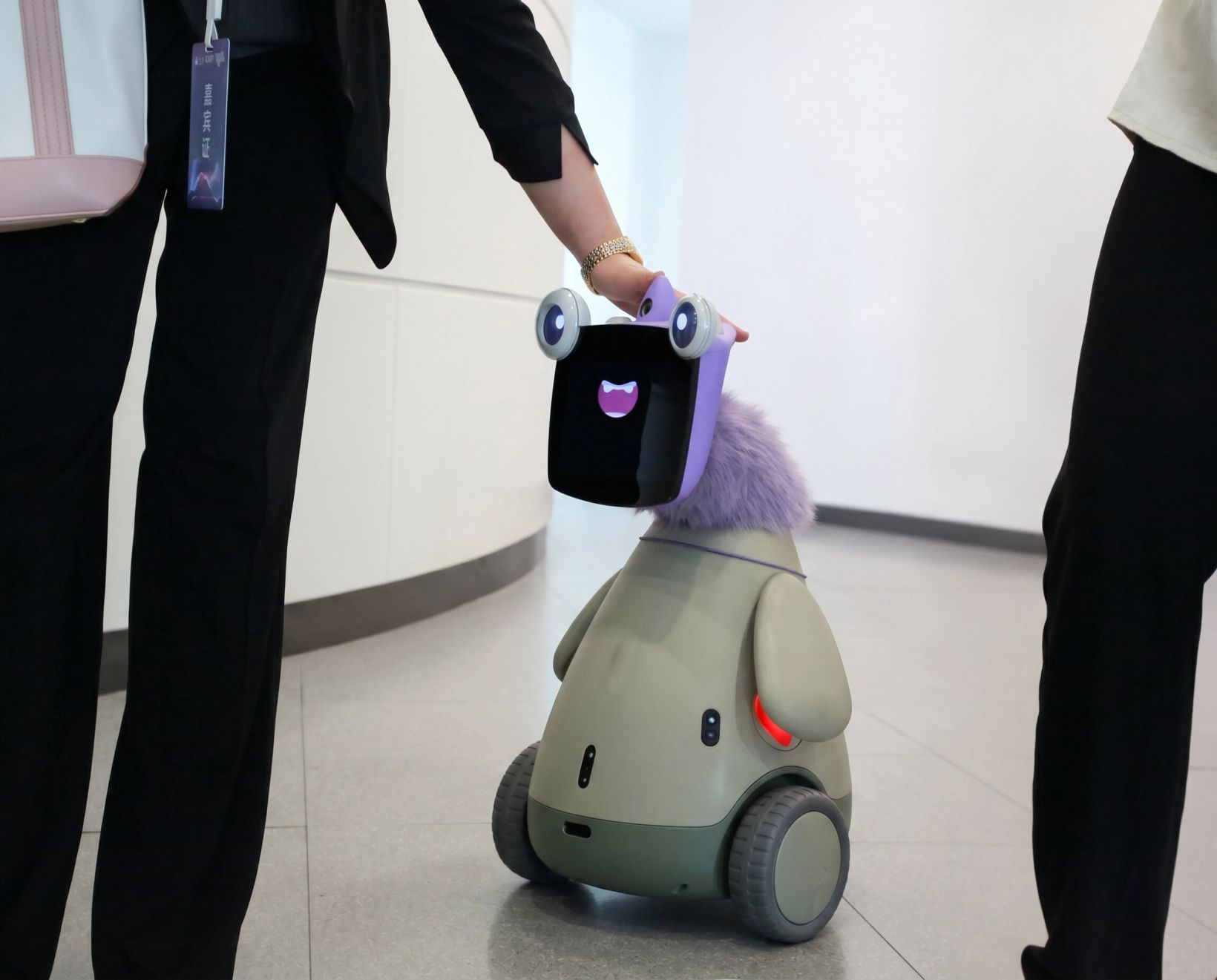
Then I think about what it means to put a device in your home whose entire job is to learn your household: your routines, your conversations, who lives there, when everyone's home, what everyone looks like.
We already spent years arguing about whether baby monitors were secure enough. A hacked baby monitor could potentially expose one camera feed. What could a hacked companion expose after six months of learning everything about your family?
The manufacturer mentions local encrypted processing and a physical camera cover, which helps, but doesn't really answer that question. Price isn't announced yet, so I can't even tell you if it's an expensive privacy risk or a cheap one.
Verdict: 🔴 Cute idea. Terrifying amount of trust.
7. PrimeBOT Q1
$8,000 gets you a small humanoid robot, about 88 cm tall, that can perform more than ten martial arts moves and comes with a swappable shell, head, voice and personality, plus a dev platform for people who want to build on top of it.
Basically an $8,000 kid who can't load the dishwasher. At least you can change its face.
I can see why this appeals to developers, robotics enthusiasts and schools. As someone deciding whether to spend that money on my own home, the functionality-to-price ratio just doesn't work for me.
And there's a quieter issue underneath the price tag: the broader PrimeBOT ecosystem includes cameras, sensors, voice interaction, and privacy documentation that describes voice, image or interaction data potentially going to external services depending on the mode. That doesn't mean everything is uploaded somewhere by default, but it does mean I want a lot of answers before a humanoid robot with a camera and a mic lives in my house permanently.
My dog has already seen enough of my life. She just can't talk, which, for once, is a feature.
I don't want to discover one day that I've become an involuntary OnlyFans creator because someone found a vulnerability in my $8,000 robot.
Verdict: 🔴 Expensive, limited, and a little too observant for my liking.
8. AGIBOT A3
At around €90,000, we're not comparing a gadget to other gadgets anymore. We're comparing it to a salary.
The specs: 173 cm, 55 kg, walks, interacts, manipulates objects, cameras and mics, 5G, hot-swappable batteries, aimed at commercial spaces like retail, reception and entertainment.
If I ran a company and spent €90,000 on something that could do a backflip and run one webinar, I'd be impressed for about a week, and then I'd want a lot more for that money. That budget hires a genuinely good specialist for a year. Someone who runs the webinar, has ideas, solves problems, and, if you ask nicely, might even do the backflip.
The robot still needs charging, maintenance and software updates on top of the sticker price.
And knowing how smart devices work, I'm half expecting a €200/month subscription just to let it carry my coffee mug to the dishwasher. €500 for Unlimited and maybe it'll actually load the dishwasher too.
To be clear, I made that subscription up. Please don't get any ideas, AGIBOT.
Verdict: 🔴 For €90,000, I need an employee, not a very expensive colleague who does backflips.
9. Roomba Duo
I had a robot vacuum for more than four years. It vacuumed, mopped, handled small thresholds, occasionally got stuck under a chair. Nothing dramatic.
iRobot's answer to the one thing robot vacuums still can't reach, tight spaces under furniture, is apparently a second, smaller robot vacuum.
The main unit is a large vacuum-and-mop with steam cleaning that physically carries a smaller Roomba on top. A mechanical arm deploys the small one into gaps the big one can't fit into, and the two share a map.
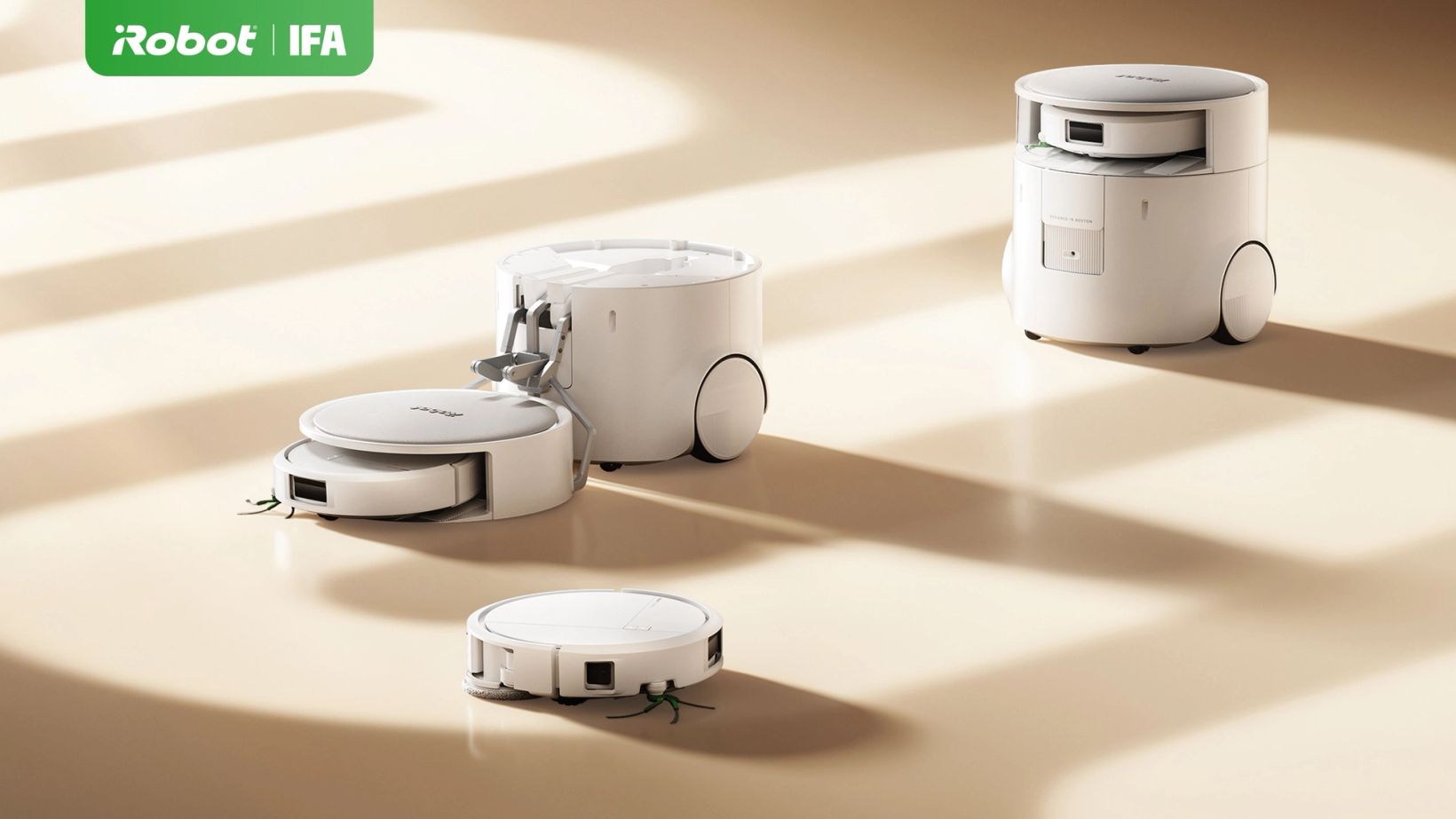
It's clever, I'll give it that. More elegant, in my opinion, than the competing approach of giving vacuums mechanical legs to climb over obstacles.
But now count the failure points: motor, sensors, battery and software on unit one; the same list again on unit two; plus a mechanical arm and a docking mechanism coordinating both.
My old vacuum, with none of that complexity, lasted four years without drama. I'd put real money on one of these two robots needing "therapy" within a year, and I'd put more money on the warranty finding a reason not to cover whichever part breaks.
No price yet. It's still a concept, and the price is genuinely the whole decision here. One premium-vacuum price for something that cleans meaningfully better, I'm interested. Double the price for double the robot, I'm out.
Verdict: 🟡 Clever solution. Possibly overengineered. Show me the price.
10. Hohem Eyepic
Small detail, but it's the one that actually got me: the 4K camera module on this three-axis gimbal detaches magnetically, so you can wear it as an action camera while the gimbal and its screen stay separate. Useful if you shoot content alone and need to see what you're filming without holding a rig up to your face.
AI barely factors into why this is interesting, even though it's on the box anyway. Would I test it? Yes. Would I pay €700 for it? No.
Hohem hasn't announced a price, so that's the whole review, really.
Verdict: 🟡 Show me the price.
11. Strutt ev¹c
This is the one on the list I actually want to see succeed.
It's a smart powered mobility device using cameras, LiDAR and its own sensing to avoid obstacles, assist steering, and navigate autonomously in mapped indoor spaces. You can summon it through an app, it has roughly 32 km of range, and it breaks down into pieces for transport.
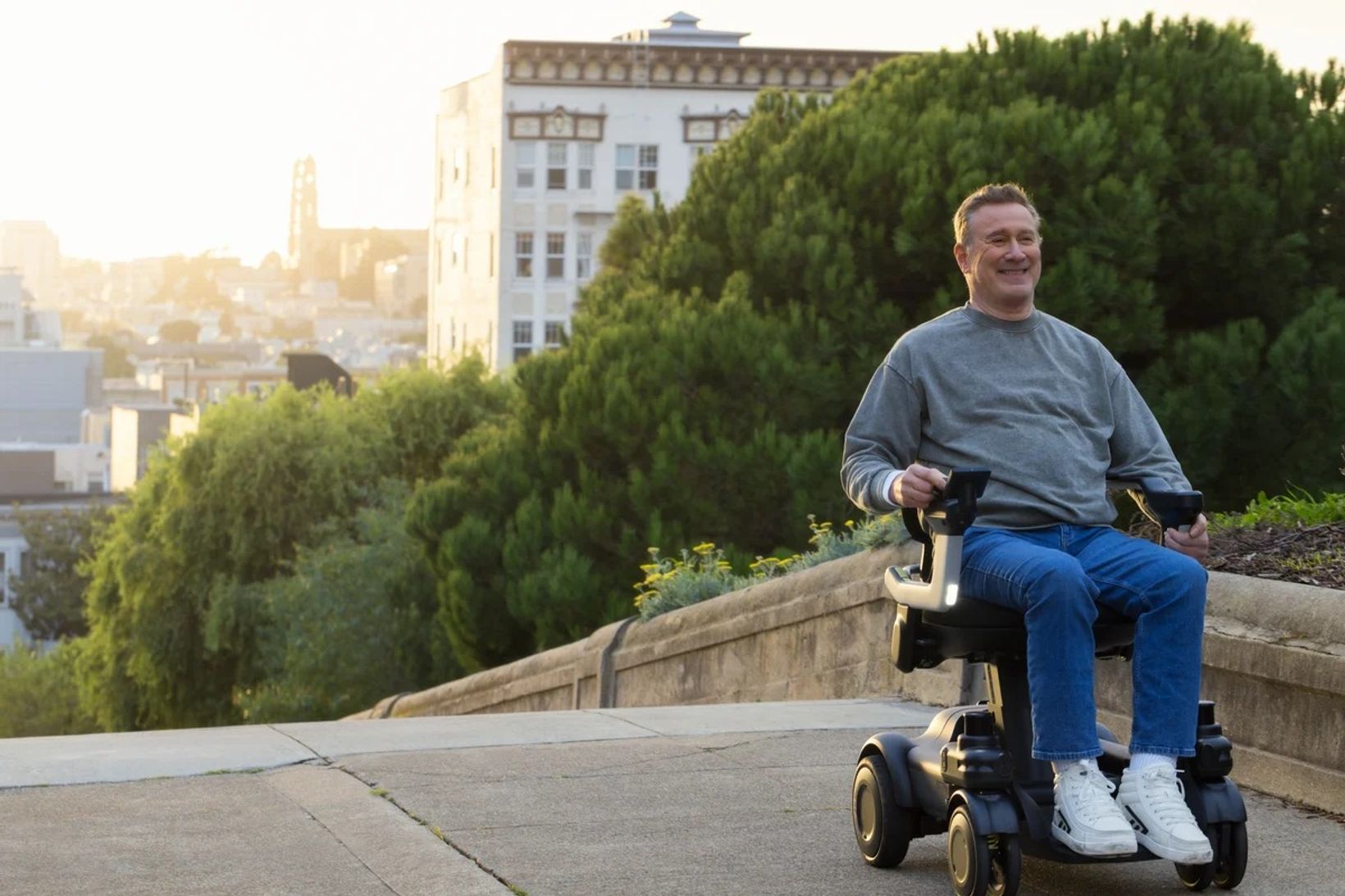
The European price is around €6,799 before tax.
The functionality itself is exactly where I think AI belongs: not as a bullet point nobody asked for, but solving a real mobility problem. Obstacle detection matters here. Assisted steering matters. Autonomous navigation has an actual purpose.
The problem is the price.
At more than €6,000 before tax, a lot of people who could genuinely benefit from these features simply won't be able to afford them. Still, this is the kind of innovation I'm happy to see.
Verdict: 🟢 Actually useful. 🔴 Not actually accessible.
12. Dyson CameraJet
Of course Dyson made a €479 toothbrush.
This is a company famous for very expensive hair dryers, so a camera-equipped toothbrush with machine learning that shows you which spots you missed, plus a targeted water jet between teeth, tracks perfectly with everything else they do.
The tech is genuinely cool.
I'm still not spending €479 on a toothbrush, and I suspect I won't have to. Give it a year and someone will probably ship a €200 version that does 90% of the job. I'll be waiting for that one, while the rest of the internet buys the Dyson anyway.
I'm already dreading February 14, 2027: Instagram full of unboxing photos captioned "from my love ❤️." Nothing says romance like a 100,000-pixel camera in your mouth.
Verdict: 🟡 Cool technology. I'll wait for the €199 version from someone else.
13. PetPhone
A smartphone for your dog's collar. GPS, geofencing, activity tracking, two-way voice, and AI to interpret mood and behavior from sound. Around €90, plus an ongoing connectivity fee. Apparently your pet can learn to call you through this thing.
If my dog figures that out, I'm throwing my own phone in a lake, because she will call nonstop. And I don't need AI to tell me what she wants when she does. I've collected that data myself over several years.
50% of the time she wants a treat.
49% she wants to go outside.
The remaining 1% is something along the lines of "woof woof" that neither AI nor I will ever understand.
The boring parts of this product are the good parts. GPS and geofencing for a dog that gets loose is a real use case, it's just not a new one. The remote-music feature I will never touch. Between my own playlist and my son's, I have enough audio to manage already.
Verdict: 🟡 Useful tracker. My dog doesn't need a smartphone.
Bonus: Eufy Fall Detection Sensor
No price announced yet, and after everything else on this list, this is the one I keep coming back to.
It uses mmWave radar instead of a camera to detect falls and prolonged inactivity, and if something looks wrong, it can check in through two-way communication. That's the whole feature set. I mean that as a compliment.
This isn't for everyone who needs full-time care. It's for the much larger group of people who don't need constant supervision but whose families would still like to know, quickly, if something goes wrong: an elderly parent, someone living alone, someone recovering from surgery.
No camera watching them all day. No dramatic AI-companion pitch. Just a sensor doing one job.
For someone who doesn't need 24/7 care but whose family still wants an extra layer of safety, this could be a much more affordable option than constant supervision.
If it launches at a reasonable price without a ridiculous subscription bolted onto it, it's an easy yes for me.
Verdict: 🟢 Actually useful. Just please don't ruin it with the subscription.
So, would I actually buy any of these?
I don't think AI hardware is the problem. I think the starting question is, a lot of the time.
Instead of "what problem could technology actually solve," it's "what can we put AI into this time", and that's how you end up with a toothbrush that has a camera and a dog that can dial your number.
What surprised me, going through all thirteen, is that the products I actually wanted weren't the impressive ones.
A €100 clip that might organize the chaos in my head beat an $8,000 humanoid robot without much of a contest. A radar sensor with one job beat a robot that does backflips. I can admire the engineering inside a €479 toothbrush and still have zero desire to own one.
If there's a rule buried in all of this, it's that the more a device wants to know about me, my conversations, my home, my routines, my location, the higher the bar for what it needs to give back.
"It's cute" stopped being enough a while ago.
Show me why you're worth the access, not how much AI you managed to cram inside.