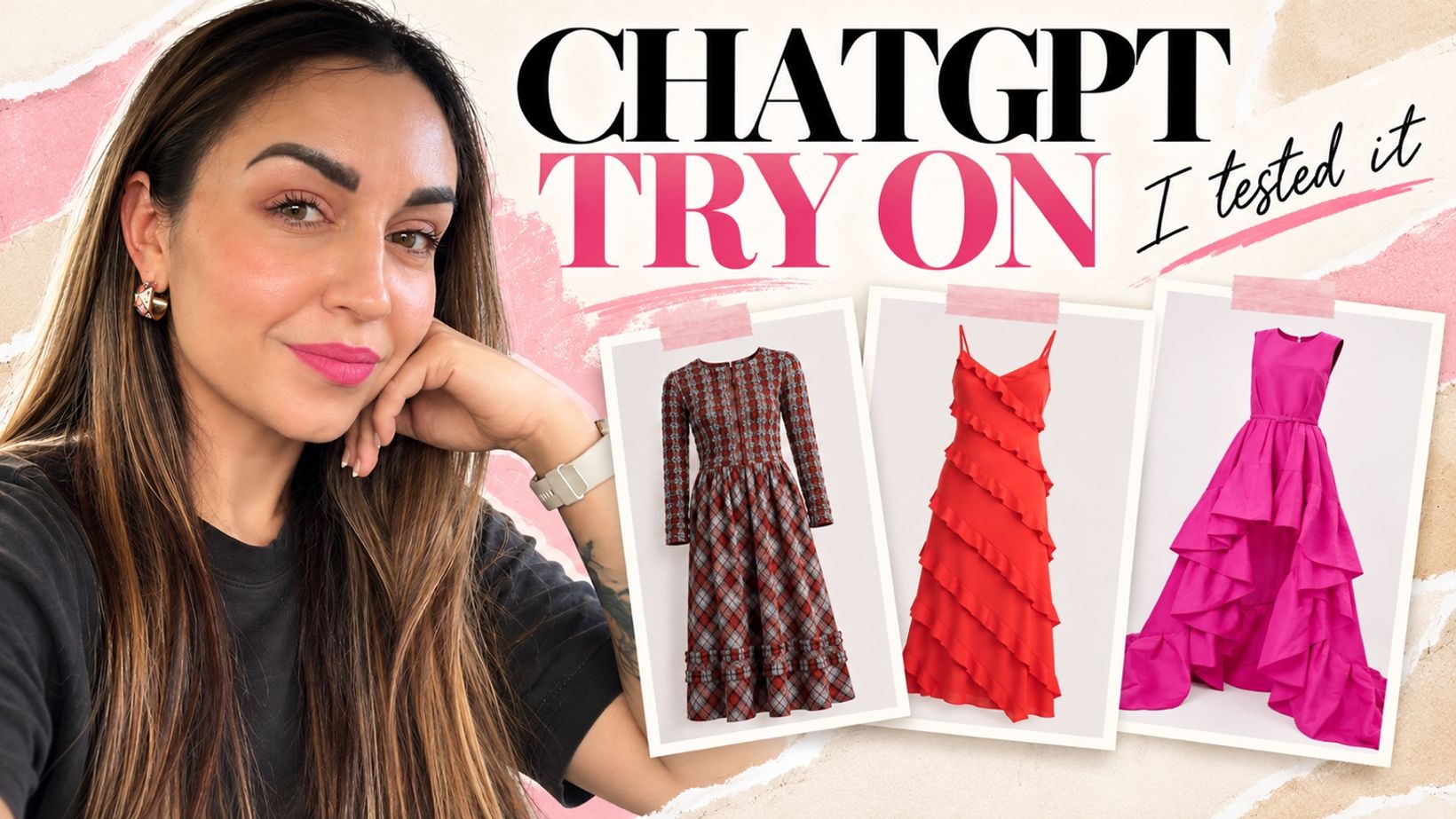
On October 1, OpenAI added Try On to ChatGPT Shopping. Give ChatGPT a photo of yourself and an item you want to try, and ChatGPT Images generates a picture of you wearing it. If you're shopping inside ChatGPT, you can also use Try On directly from eligible product results.
Does it work? Kind of. The pictures look convincing, but in my tests it also changed my body, my face and my proportions, and the results swung wildly depending on which photo I used. I wouldn't use it to figure out how something will fit, or to decide whether to buy it.
I tried three very different dresses, one of them three times with three different photos of me. I finished with a €30,965 Carolina Herrera gown, because shopping is a lot easier when the budget is imaginary too. Some results were good. In others ChatGPT altered me, my kid, and even where my tattoo is. By the end I was stuck on one question: what makes this a new try-on feature, and not just another way of using the image generation that was already there?
I never pressed the Try On button
There are two ways to use it. You can find an eligible item in ChatGPT Shopping and hit Try On on the product card. Or you can upload a picture of something you found elsewhere and ask ChatGPT to put it on you.
I went with the second one, since I already had clothes I wanted to test. I told ChatGPT I wanted to try the new Try On feature, uploaded the item and my photo, and that was all. No special interface, no setup. It looked exactly like a normal image request: here's me, here's a dress, show me in it. And yes, this is an official way to use the feature, not a hack.
Which is exactly what bothered me. ChatGPT could already edit images and use one picture as a reference for another. Giving ChatGPT one photo of me, another of a dress, and asking it to combine the two isn't a new trick. A Try On button on shopping results makes it easier if you're already browsing there, sure. But when one of the two official methods looks identical to a regular Images request, calling it a whole new feature seems a bit generous.
Maybe the results would change my mind, though. That's what I wanted to see.
The red dress looked good. Maybe too good.
I started with a red evening dress and a photo of me in a shoe shop.
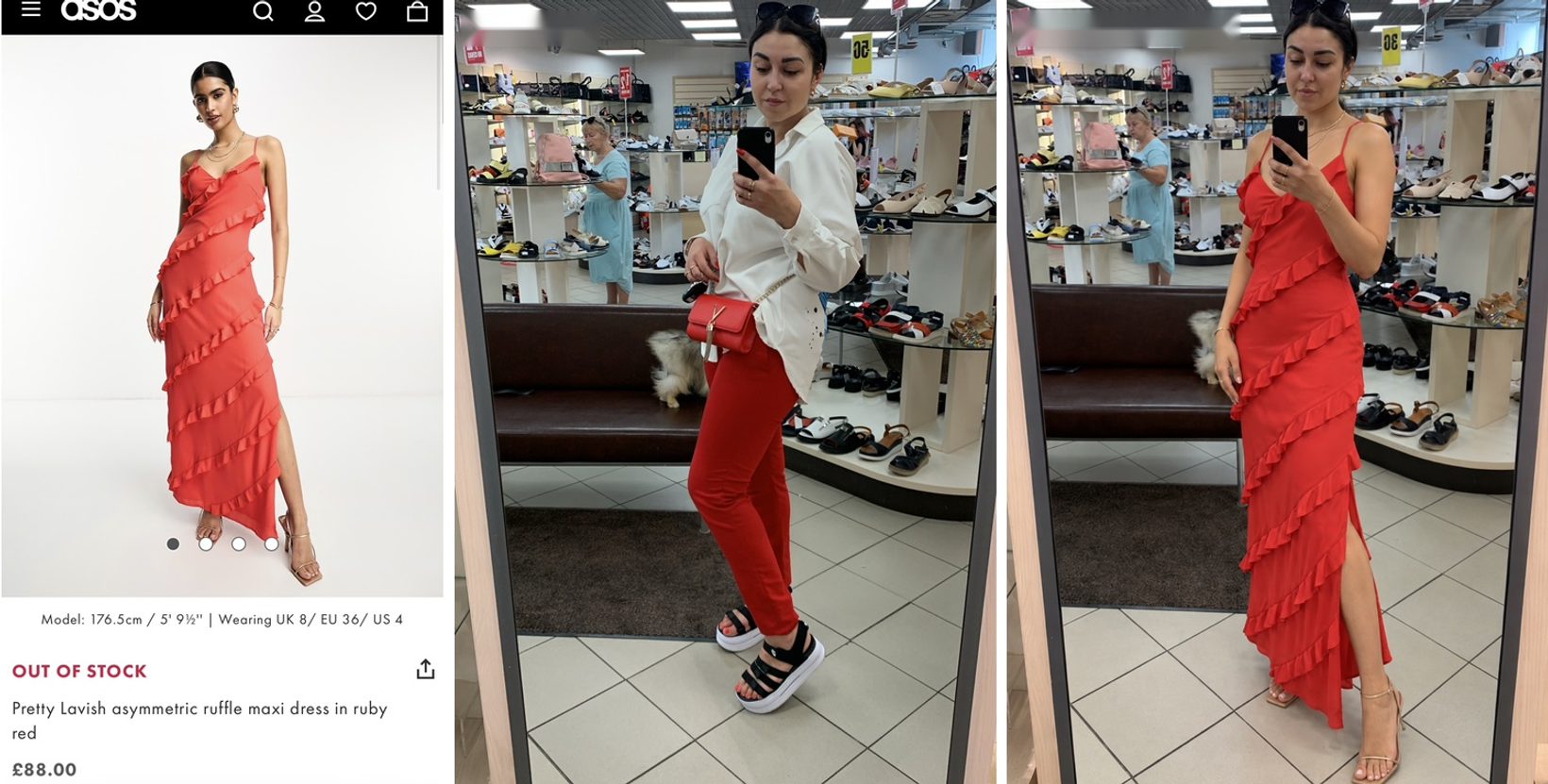
At first glance it worked. My face was still recognisable, the dress looked believable, and the image didn't scream "AI". The one funny thing was my own doing: I had apparently decided a floor-length red gown was normal shoe-shopping wear.
Then I put it next to the original, and ChatGPT had made me noticeably thinner. The result looks much closer to the model's proportions in the product photo than to mine. The face is mine, the figure isn't. That makes the picture prettier and the try-on pointless. If I'm trying clothes on virtually, I don't need a slimmer me. I can imagine that on my own.
Same dress, three photos
This part was more interesting. I picked the checked Damson Madder Posey dress and generated it three times. The only thing I changed was my source photo.
First was a beach photo with my son.
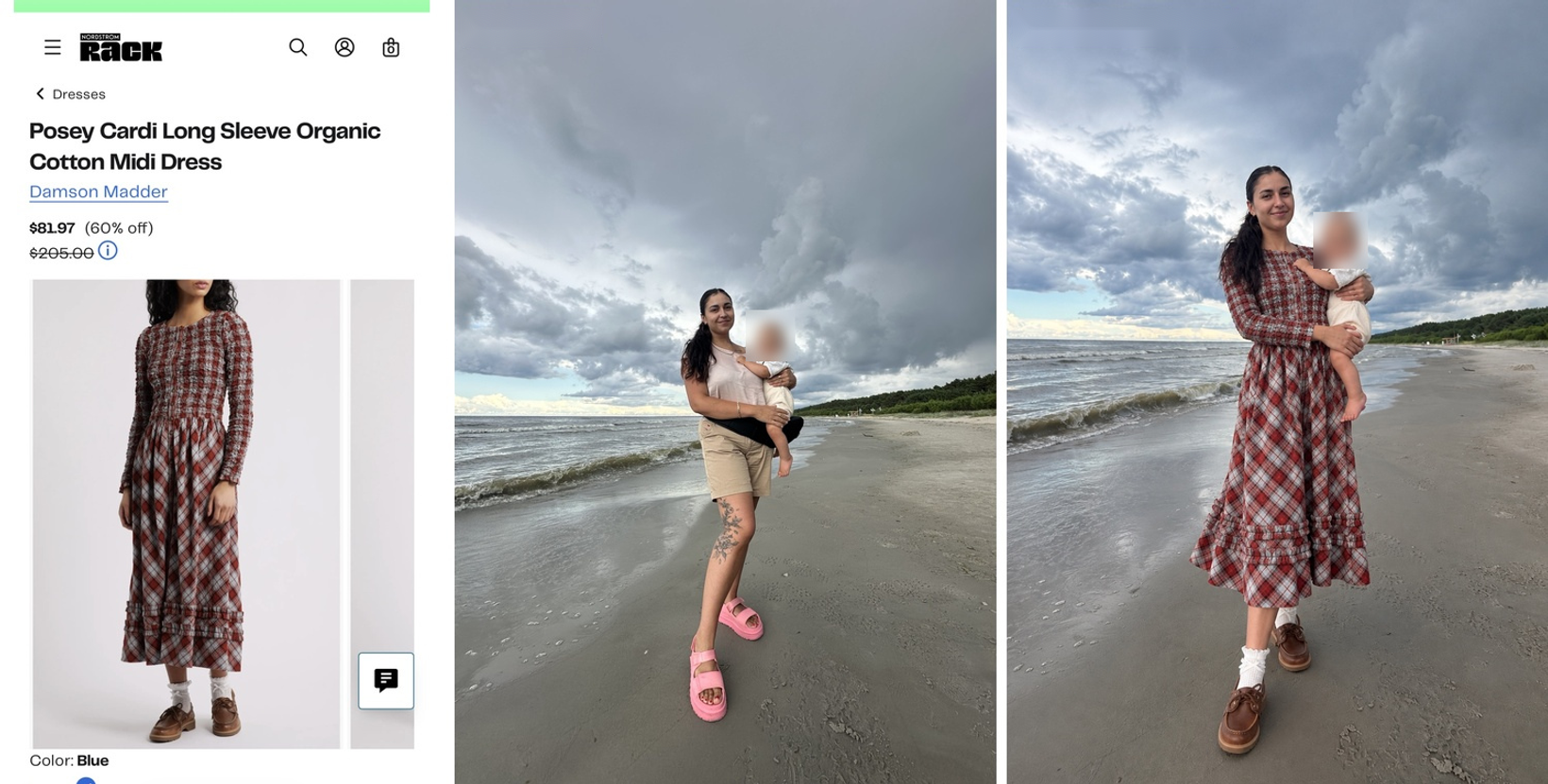
It didn't put the dress on me. It generated a brand-new version of the whole photo. I was heavily changed and so was my son. You can tell what the original was meant to be, but those aren't the same two people. For a tool that's supposed to show me in a dress, that's a pretty basic failure.
So I tried another photo of the two of us.
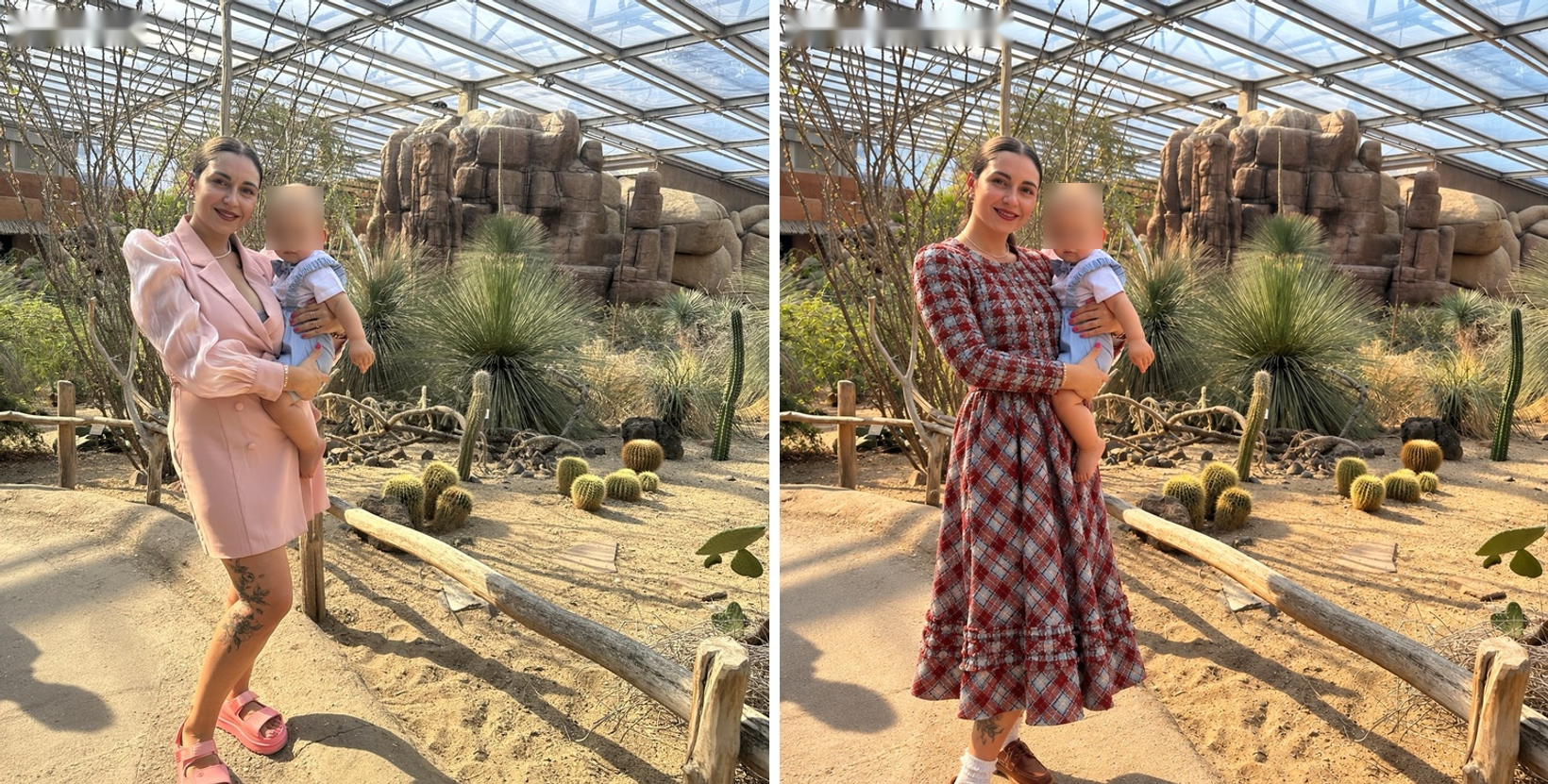
Same thing. I was redrawn completely, and my son came out a little better this time. My tattoo had also slid further down my leg, which I didn't know came with the dress.
Then I gave it a plain mirror selfie.
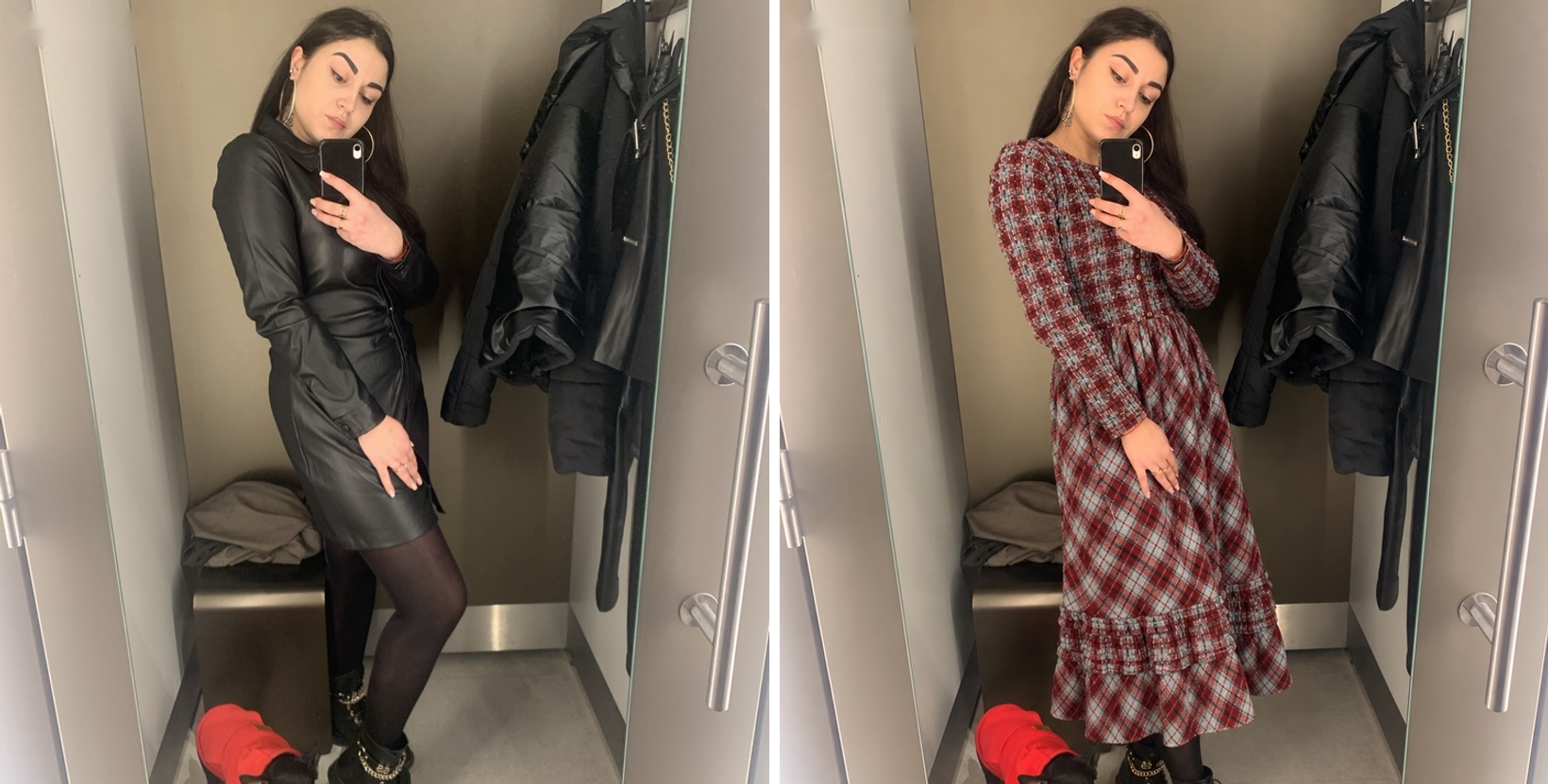
Finally, this was what I'd expected from the start. The photo stayed mostly intact and only the clothes changed.
So: same dress, same feature, three photos, wildly different outcomes. In my test, the clean mirror selfie worked far better than the busier photos. Good to know if you want to play with it. Less good if you're planning to shop with it.
And then the €30,965 Carolina Herrera
Once your virtual budget is unlimited, there's no point in being sensible.
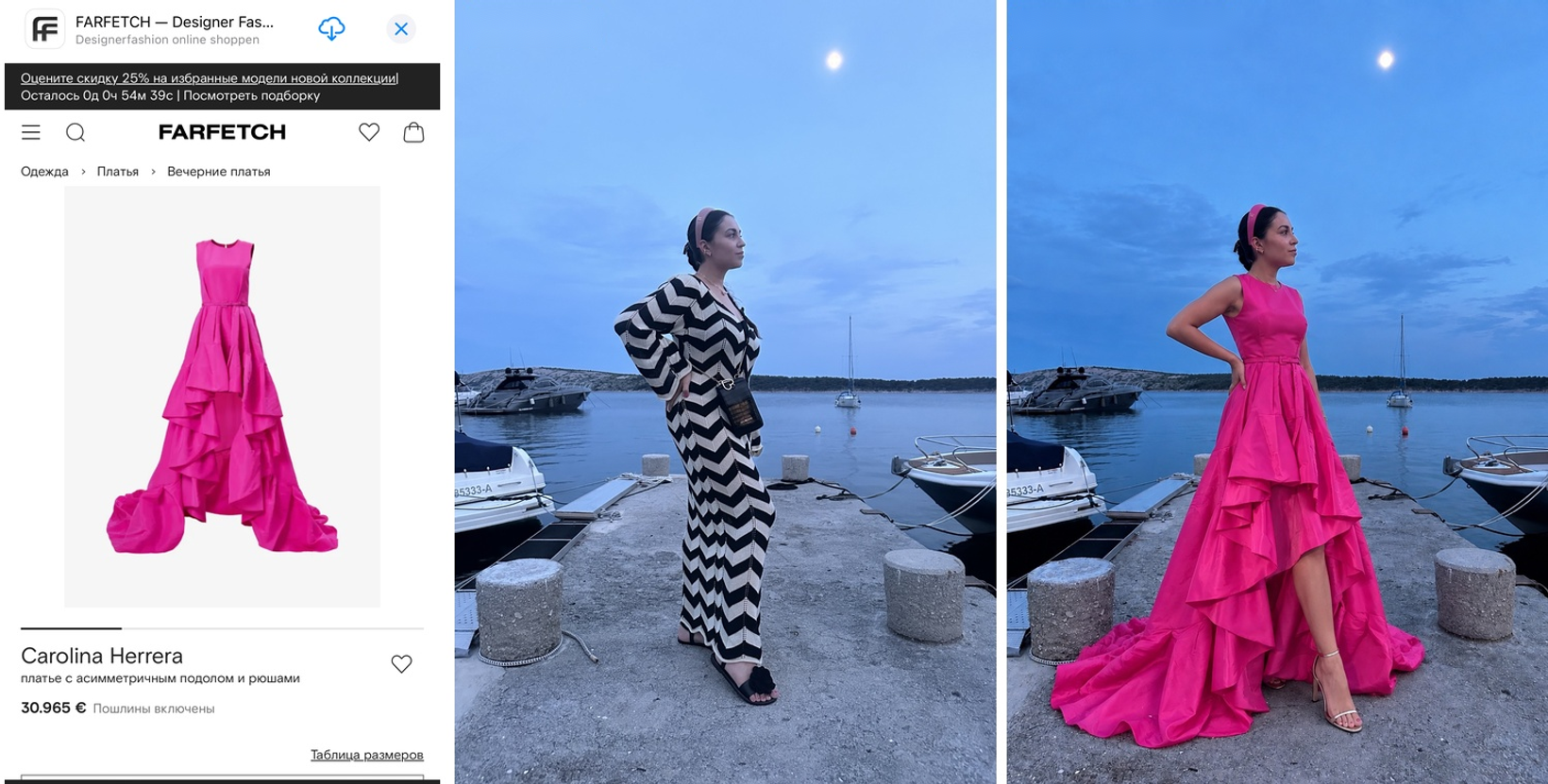
The dress itself came out fine. ChatGPT recreated the overall design well enough, so that's not the issue.
My head is. It's enormous. The head-to-body ratio is so off that I look like a Bratz doll, and once you see it you can't look at anything else. This one wouldn't pass as a real photo even at a glance.
It's also the same problem as with the red dress. My body isn't treated as a fixed reference. ChatGPT builds a person who looks like me and then makes the clothes work on her. That's image generation. I'm not convinced it's a try-on.
The obvious mistakes aren't the real problem
A giant head is funny. A wandering tattoo is funny. ChatGPT swapping out both me and my son is less funny, but it's still an obvious failure: you notice it, laugh, and don't trust the picture.
The convincing results worry me more. Take the red dress. If I hadn't checked it against the original, I'd have just thought, nice dress. Of course it looked nice, because ChatGPT had changed my body to make it look nice.
That's backwards. The question isn't whether AI can make a flattering picture of me in a dress. It obviously can. The question is what the dress would look like on the body I actually have, and after these tests I don't think ChatGPT answers that reliably. OpenAI itself says Try On images may not match the product or your appearance exactly and don't guarantee fit or size. Having tried it, I get why that warning is there.
So what's actually new?
This is the part I still don't get. If I'd never used ChatGPT Images, Try On would probably impress me more. Uploading a dress and seeing yourself in it a minute later is a cool demo of what image generation can do.
But I had used it. Before Try On, I could already upload a photo of myself plus another image and ask ChatGPT to change the first one based on the second. Clothes are an obvious use for that.
The shopping integration does cut some friction. If you're browsing inside ChatGPT, you can see an item, tap Try On and get an image without downloading product photos or explaining what you want. Fine, that's convenient.
But with something called virtual try-on I expected accuracy. Keep my body, keep my face, keep the real garment, and change as little as possible apart from putting the clothes on me. Instead, in several tests ChatGPT acted like a plain image generator: if altering my body, my proportions or the people around me made the final picture more plausible, it did that. And since OpenAI's second method is basically "upload an item and ask ChatGPT to show it on you", I find the line between the two even harder to see.
So I still don't know why this needed its own announcement. The shopping flow is easier. The experience underneath doesn't feel new.
Would I use it?
No.
I can see people having fun with it, and I did too. If you want to see yourself in a totally different style, try an absurdly expensive dress, or just make an AI outfit photo, it works.
For shopping, though, I don't see the value. If I already like a dress, an AI picture of a modified me wearing it doesn't help me decide. It can't tell me how the waist will sit, whether the proportions suit my body, or whether the fabric will behave like it does in the generated image. And if I have to hunt for the perfect source photo before I can trust ChatGPT not to redesign me, I'm not saving much effort anyway.
Maybe it'll get useful once try-on is tied to real measurements and sizing, and the person in the photo is preserved more strictly. For now it feels like a fun add-on to ChatGPT Images, not a shopping tool I'd rely on.
The €30,965 Carolina Herrera did teach me one thing, though.
If I lose about 20 kilos and shrink my head considerably, I might start waiting for the sale.